Morocco is a short flight from Europe, the costs are low compared to surfing in Portugal or France, and there are waves every month of the year. Those are the practical reasons people come here for the first time. What keeps them coming back is harder to pin down — the food, the pace, the fact that Tamraght feels like a real place and not a resort built for tourists.
This guide is for anyone considering a surf camp in Morocco for the first time and trying to figure out what it's actually like — not the brochure version, but the real thing.
Why Choose Morocco for a Surf Trip?
Year-round waves
The Atlantic delivers swell to Morocco's coast across every season. Autumn and winter bring the most powerful conditions; spring and summer are gentler and more approachable. Whatever level you're at, there's a time of year that suits you.
Warm climate
Even in winter, daytime temperatures sit around 20°C. In summer, you're looking at 28–32°C, with warm water to match. A 3/2 wetsuit covers you through the cooler months; a short suit or rash vest handles the rest.
Affordable compared to Europe
This is not a small point. What you'd spend on a week in the Canaries — flights, accommodation, surf hire, food — you can stretch considerably further in Morocco. Surf camps here offer meals, coaching, equipment, and accommodation for a fraction of what similar setups cost in Portugal or France.
Diverse surf spots
Morocco has something for everyone. Beginners have long sandy beaches with gentle reform waves. Intermediates can work on their turns at a dozen different beach breaks. Advanced surfers have Anchor Point, one of the best right-hand point breaks in the world, along with Mysteries, Killer Point, and others. You don't need to travel far between them — most are within a 20-minute drive of each other.
Surf culture
The surf culture here is relaxed and genuinely welcoming. Locals surf, coaches live here year-round because they love it, and the camps that have been here longest attract returning guests who feel like they're coming back to a second home. There's a community to it that's easy to fall into.
Best Time to Surf in Morocco
Morocco has waves year-round, but the conditions change significantly by season. Autumn (September–November) and spring (March–May) deliver the best combination of swell, weather, and value for most surfers. Summer (June–August) is warmest and ideal for beginners. Winter (December–February) brings the year's most powerful surf — excellent for experienced surfers, challenging for first-timers.
The right month for you depends on your level and what you're looking for — water temperature, crowd levels, swell size, and wind all vary across the year. We've written a full month-by-month guide to Morocco's surf season that covers everything in detail, including a quick-reference seasonal table and honest recommendations by skill level.
Why Tamraght Is One of the Best Places to Stay
Most people searching for surfing in Morocco land on Taghazout — and it's a great village. But over the last few years, the smart travellers have started staying in Tamraght, the village directly next door, and it's easy to see why.
Tamraght hasn't been built up for tourism in the same way. The streets are quieter. The restaurants feel more like the places locals actually eat. The pace is slower, and that's exactly the point. You're here to surf and decompress, not to navigate a tourist strip.
Critically, you don't sacrifice anything on surf access. Tamraght sits within minutes of multiple breaks — Hash Point, Banana Point, and Anchor Point are all within easy reach. You get the same Atlantic in front of you, the same quality of instruction, the same proximity to the best surf in the region — just without the noise.
The value is also noticeably better. Accommodation, food, and activities cost less in Tamraght than in Taghazout, which means a well-run surf camp here can genuinely include more for less.
And there's something else: community. The expat surf community that's settled in Tamraght — coaches, instructors, long-term regulars — gives it a character that's harder to find once a place tips from undiscovered to well-known. It feels like a real place, not a resort.
What to Expect From a Surf Camp in Morocco
Accommodation
Most surf camps are converted riads or purpose-built surf houses — typically whitewashed, with a rooftop terrace, communal areas, and a mix of shared and private rooms. Expect clean, comfortable, no-frills accommodation that prioritises the things that matter: good beds, fast Wi-Fi (for the evenings), and communal spaces where guests naturally end up together after sessions. Take a look at where you'd be staying at Darna to get a sense of what a purpose-built surf house looks like.
Surf coaching
Morning sessions with a qualified coach are the backbone of any good camp. Small group lessons — typically four to eight people — mean you get real feedback, not just someone watching from the shore. Video analysis has become standard at better camps: watching yourself surf back on a tablet in the afternoon is one of the fastest ways to improve.
Equipment
At Darna, we provide everything: boards suited to your level, leashes, wax, and wetsuits. You don't need to travel with gear. Some guests bring their own boards once they've visited before and know what conditions to expect, but for a first trip, you won't need to.
Meals
Morocco is an excellent food country, and a good surf camp takes that seriously. Expect freshly prepared breakfasts, lunches, and dinners built around local produce — tagines, salads, fresh bread, fruit. The food is usually one of the things people mention when they talk about their trip. It's not an afterthought.
Community
This is harder to write about without sounding vague, but it's real. Staying at a surf camp with a dozen other people who've all prioritised the same thing — wave time, learning, switching off — creates a specific kind of social dynamic. You eat together, surf together, and end up on the roof together at the end of the day. People who've never met on Monday are going for dinner together on Friday. It's a consistent feature of surf camp travel that people don't fully expect and end up talking about most.
Beginner vs Intermediate Surfers
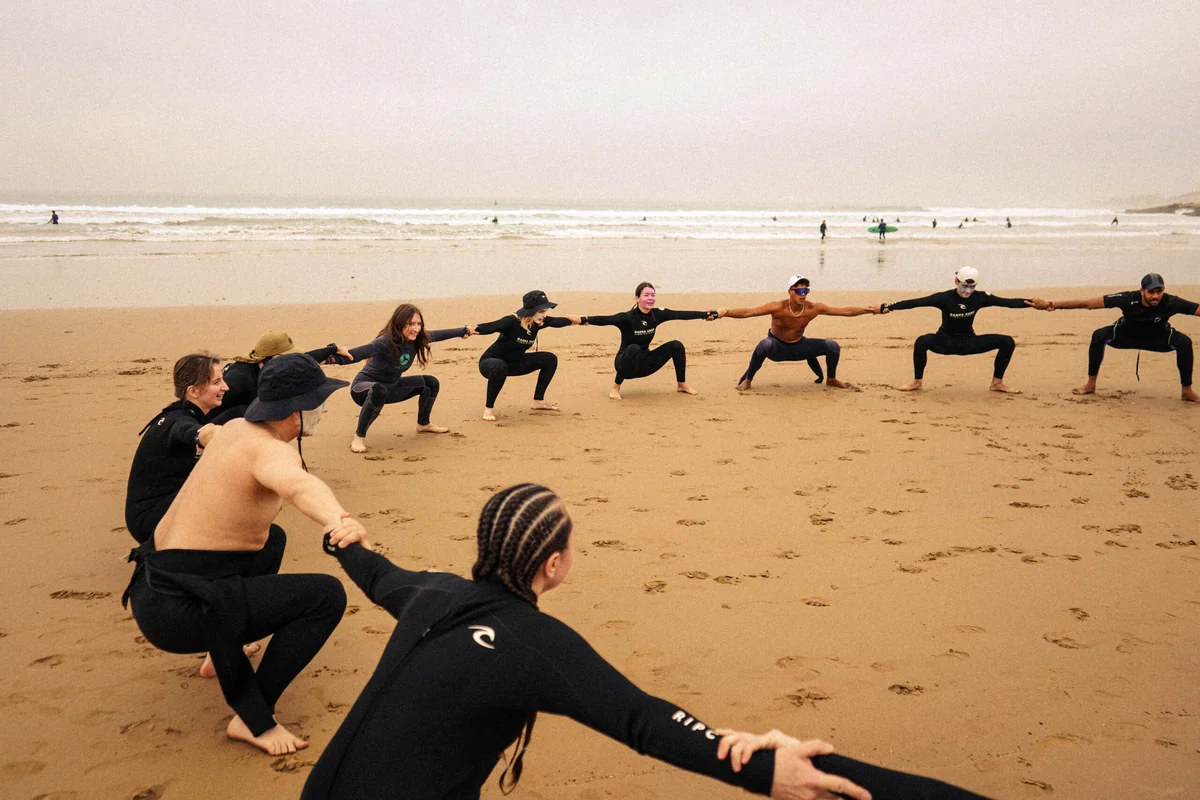
Morocco works for beginners and intermediate surfers alike, at different breaks and in different conditions. Beginners get the most forgiving conditions in spring and summer — but Darna coaches work with beginners in every month of the year. When swell is heavy, sessions move to sheltered spots where the waves remain manageable regardless of season. Most first-timers stand up within the first or second session. Intermediate surfers get the most from autumn, when the swell has more power and shape and the variety of breaks gives you something to genuinely push into.
If you've never surfed before and want to know exactly what to expect — what your first lesson looks like, how fast you'll progress, what level you actually need to be — we've put that all in one place: our complete beginner's guide to surfing Morocco.
What to Pack for a Surf Camp in Morocco
You don't need to bring much. Here's what actually matters:
- Passport — valid for at least six months beyond your travel date
- Reef-safe sunscreen — essential; bring more than you think you need
- Rashguard or UV top — the Moroccan sun is strong even through clouds
- Flip-flops — for walking to and from sessions
- Casual clothes for evenings — nothing formal, but a light layer for cooler nights
- Sunglasses — polarised lenses are useful but not essential
- A small day bag — for the beach and any day trips
- Personal medication — pharmacies exist but your specific prescriptions may not
- Beach towel — most camps do not provide them
- Reusable water bottle — tap water is not drinkable; having a bottle saves daily plastic
- Basic first aid supplies — antiseptic cream and plasters for any scrapes or cuts
- Unlocked phone — a local SIM is cheap and useful
What you don't need to bring: surfboards, wetsuits, surf wax, leashes. Leave them at home.
Frequently Asked Questions
Do I need to know how to surf before coming to a surf camp in Morocco?
No. Most camps cater to complete beginners and experienced surfers simultaneously. You'll be grouped with people at your level, and a good camp will match you to the right break and the right board from day one.
Is Morocco safe to travel to?
Yes. The surf region around Tamraght and Taghazout is well-travelled and generally very safe. The same common sense you'd apply anywhere applies here: keep valuables secured, be respectful of local customs, and you'll have no issues.
Do I need a visa?
Most European and North American passport holders do not need a visa for Morocco for stays under 90 days. Check with your country's foreign travel advice for the most current requirements.
What language do people speak?
Darija (Moroccan Arabic) is the primary local language, with Tamazight (Berber) also widely spoken. French is used in formal and commercial settings. In the surf areas, English is understood by most people working in tourism, and you'll get by easily.
How do I get to Tamraght from Agadir airport?
The airport is roughly 30 minutes away. Most surf camps will arrange an airport transfer, which is the simplest option. Grand taxis from the airport are also available and inexpensive if you've already exchanged some dirhams.
Can I travel solo to a surf camp?
Absolutely. Solo travel is one of the most common ways people arrive at surf camps, and the communal structure means you're never actually on your own. Most lasting friendships from Morocco trips start with two strangers eating dinner together on the first night.
Have more questions?
Visit our full FAQ page — it covers everything from what's included in the packages to cancellation policy.
Ready to Go?
Morocco rewards the decision to go. It's not the easiest place in the world to reach — though it's closer than most people assume — but from the moment you're in the water, you understand why surfers keep coming back.
If you're planning a first trip and want somewhere with proper coaching, good food, a community atmosphere, and waves that suit every level, Darna Surf Morocco is based in Tamraght and built around exactly that experience. Take a look at what's included in our surf packages or explore where you'll be staying — and if you have questions, get in touch.
Morocco is closer than most people assume. The trip tends to exceed expectations. That part usually takes care of itself once you're there.